The numbers don’t lie. The Middle East, Mediterranean, and Africa (MEMA) region is home to 20% of the world’s population, yet it hosts a mere 6% of global registered clinical trials.
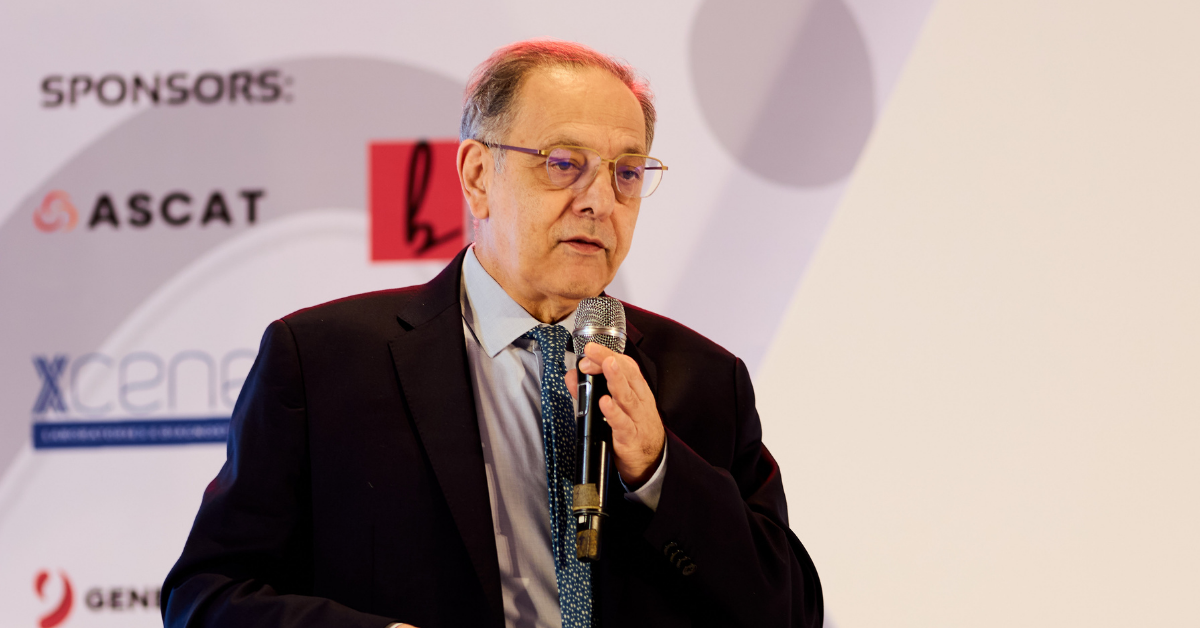
This alarming gap means that life-saving research, cutting-edge therapies, and vital investments consistently bypass millions of people. At the Impact Africa Summit (IAS) 2025, Prof. Miguel Abboud of the American University of Beirut delivered a compelling diagnosis: This deficit is not due to a lack of talent or patients; it is a systemic problem of regulatory hurdles and operational fragmentation.
Prof. Abboud didn’t just point out the problem; he delivered a practical, two-part solution to transition the MEMA region from a research afterthought to a global scientific hub.
The Sickle Cell Imperative: When Research Ignores the Most Affected
To illustrate the human cost of this research gap, Prof. Abboud focused on Sickle Cell Disease (SCD).
SCD is one of the most devastating genetic disorders on the continent. However, as global drug development accelerates, the distribution of centers in pivotal trials is often dictated by World Bank income criteria. This practice means that the populations most affected by the disease are often the last to benefit from the trials designed to cure it.
This highlights an inequitable paradox: The patients who provide the greatest genetic diversity and represent the highest burden of disease are profoundly underrepresented in the research that should be helping them.
Success Proves Capacity
The good news is that high-quality, patient-oriented research can thrive in low-resource settings. Successful initiatives, like the REACH Trial (Hydroxyurea Therapy for Children with Sickle Cell Anemia in Sub-Saharan Africa), prove that when trials are backed by:
- Robust Protocol and Design
- Active Leadership from steering committees
- Deep Investigator Buy-in and training
… African centers can execute world-class research. The challenge is making this the standard, not the exception.
Inside the Trial: Five Practical Roadblocks to Research in Africa
Why are so many trials blocked or delayed? Prof. Abboud shared five key operational hurdles based on real-world experience, illustrating how non-scientific details can cripple research:
- The Drug Donation Dilemma: Academic institutions often face legal and logistical issues that prevent them from accepting donated study drugs. The resulting work-around having to purchase the drug locally or find a local manufacturer is a massive, costly, and time-consuming detour for research teams.
- The Logistics Nightmare: Shipping large, heavy equipment (like specialized imaging machines) is an enormous bureaucratic challenge. The simple solution? Simplicity wins. Researchers must pivot to using easily shippable, reliable technology to reduce dependency on complex customs and import procedures.
- The Visa Barrier: The simplest things can halt a life-saving study. Research team members often face year-long delays in obtaining visas for international training and collaboration. This regulatory detail must be factored into staffing and planning, often a year in advance.
- Legal Redundancy: Researchers often must navigate duplicate legal oversights from university counsel and external counsel, alongside local regulatory authority (FDA) approval. This painful redundancy kills momentum and wastes precious time.
The Call to Action: A 16-Step Roadmap to Scientific Sovereignty
The solution is not more individual effort, but systemic, unified regulatory reform. The African Medicines Agency (AMA) represents the best vehicle for this change, offering a path to harmonize the fragmented landscape of 54 nations.
However, the AMA must make clinical research a core focus not just drug approval. Prof. Abboud outlined 16 specific recommendations for governments and regulatory bodies to adopt immediately, and here are a few:
- Streamlining Redundancy: Clearly define the maximum time expected to obtain approval from competent authorities and delete all overlapping preclinical requirements.
- The Ethics of Consent: Clarify and unify procedures governing informed consent, particularly for illiterate and vulnerable participants, ensuring true understanding and ethical practice across all jurisdictions.
- Future-Proofing Data: Establish robust legal frameworks for biobanking and material transfer agreements to allow ethical, cross-border data and sample sharing that accelerates discovery.
- Capacity Building: Invest in developing a unified cadre of trained local investigators and health care professionals with deep clinical trial expertise.
The goal is to move toward a unified regulatory framework across the largest possible number of MEMA countries. This will position the region as an ethical, reliable, and attractive market for global investment, ensuring that the 20% of the world’s population living here are no longer excluded from the promise of modern medicine.
Africa is ready to lead. The research is ready to save lives. All that remains is for the regulatory roadmap to be adopted and for doors to be opened.